
Most indoor plants do not die from too little water. They die from too much. If you have ever lost a plant that you looked after every day, overwatering was probably the reason. This guide gives you a simple way to know when a plant really needs water.
There is no fixed schedule
Watering every Sunday sounds easy, but plants do not read calendars. How often a plant needs water depends on its type, the pot size, the soil, the light and the weather. A small pot in a bright window can dry out in three days in June, while the same plant in a shady room in January may need water only every two weeks.
Use the finger test
Push your finger into the soil up to your first knuckle, about two to three centimetres. Then decide:
- If the soil feels dry, most common houseplants such as pothos, spider plants and rubber figs are ready for water.
- If the soil feels damp, wait a day or two and check again.
- For snake plants, ZZ plants and succulents, wait until the soil is dry much deeper down, almost all the way through.
Lifting the pot also helps. A dry pot feels much lighter than a freshly watered one, and after a few weeks you will know the difference by hand.
How to water properly
- Water slowly and evenly until water runs out of the drainage hole.
- Empty the saucer after about 15 minutes. Roots that sit in water start to rot.
- Use room-temperature water, which is gentler on roots than very cold water.
- Water the soil rather than the leaves.
- In hot weather, water in the early morning so the plant has water for the day.
Summer, monsoon and winter in Pakistan
Weather in Pakistan changes a lot through the year, and your watering should change with it.
- Summer (April to June): hot, dry air dries the soil quickly. Check the soil every two or three days and water early in the morning.
- Monsoon (July to September): the air is humid and soil stays wet for longer. Check the soil first and do not water out of habit.
- Winter (December to February): most plants grow slowly and need much less water. In a cold room the soil can stay wet for a long time.
Signs of overwatering
- Yellow leaves, especially the lower ones.
- A soft or blackening stem near the soil.
- Soil that stays wet for many days or smells musty.
- Tiny flies hovering around the pot.
Signs of underwatering
- Dry, crispy leaf edges.
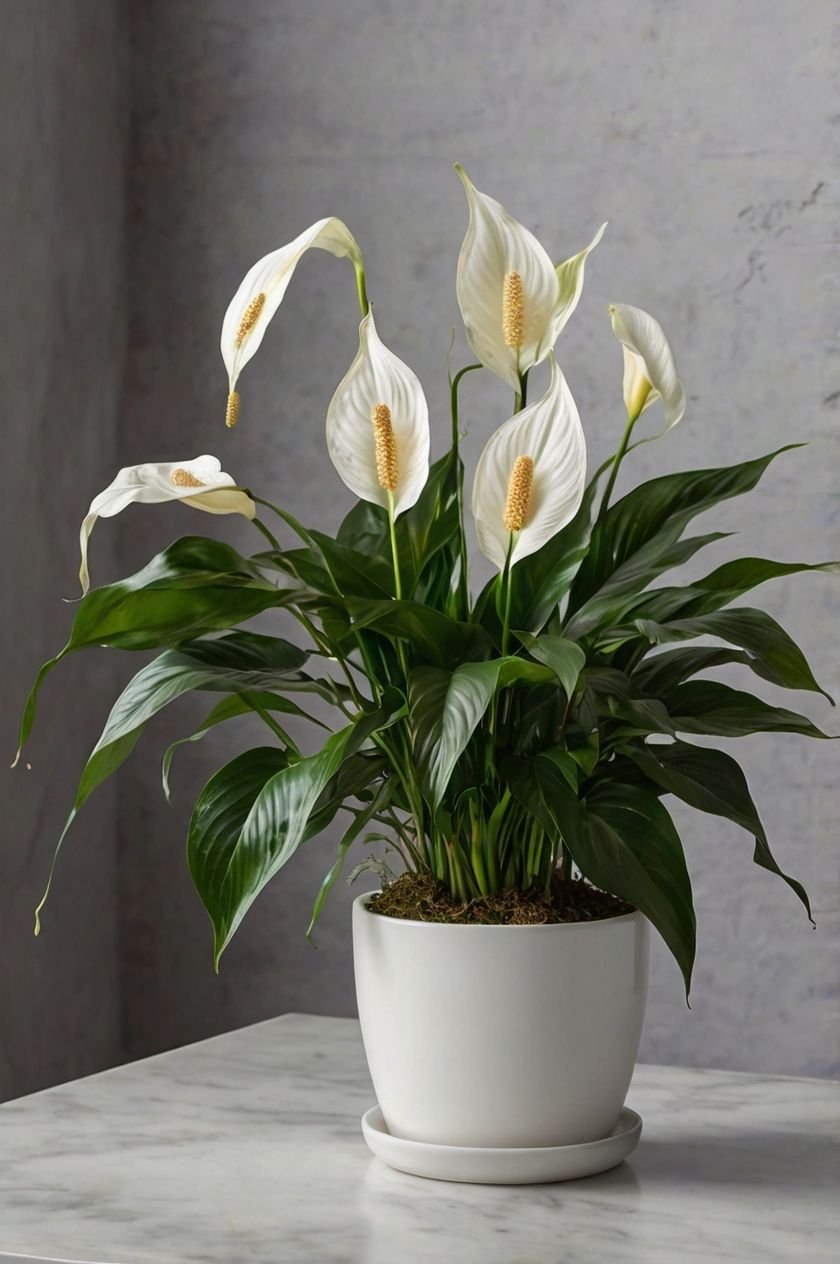
- Drooping leaves that stand up again after watering. The peace lily is famous for this.
- Soil that has shrunk away from the edge of the pot.
Plants that need less water
The ZZ plant and the snake plant store water in their thick leaves and roots, so they prefer to dry out between waterings. They are a good choice if you travel or forget to water. Plants with thinner leaves, such as the peace lily, like the soil to stay evenly moist but never soggy. You can browse all our indoor plants and read the care notes on each product page.
Quick checklist
- Does the pot have a drainage hole?
- Did you do the finger test first?
- Did you empty the saucer?
- Are you watering less in winter and during the monsoon?
How the pot changes watering
The kind of pot you use affects how fast the soil dries.
- Terracotta and clay pots let water pass through the walls, so soil dries faster. They suit cacti, succulents and the snake plant.
- Plastic pots hold water for longer. Water less often.
- Glazed ceramic pots hold water too, and many do not have drainage holes, so use them as an outer pot over a plain pot with holes.
Bottom watering
If the soil has become very dry and water runs straight off the top, try bottom watering. Stand the pot in a tray of water for 15 to 20 minutes. The soil soaks up water from below. Then let it drain well and empty the tray.
Watering while you are away
- Water deeply just before you leave.
- Move plants out of direct sun, so that they use less water.
- Group plants together in a bright room.
- For one to two weeks, tough plants such as the ZZ plant and the snake plant are fine on their own.
- For longer trips, ask a friend to check on the plants.
Rainwater and tap water
Most plants are happy with ordinary tap water. If you collect rainwater in the monsoon, cover the bucket so mosquitoes cannot breed in it, and use it within a few days. If white crusty marks form on the soil or pot, flush the pot with plenty of plain water now and then.
A note on saucers
Empty the saucers of your plants every day or two. Standing water can rot the roots and also lets mosquitoes breed.
Questions people ask
Is it better to water in the morning or evening?
Morning is best. In very hot weather, you can also water in the cool of the evening.
Should I use ice cubes?
Not recommended. Cold shocks the roots and does not water the plant evenly.
Does misting help?
For most plants, misting does very little. Water the soil properly instead.
This is a general guide, and every home is different. If you are not sure about a plant, call or WhatsApp us on 03128018787 and tell us which plant it is and where it sits, and we will be happy to help.