
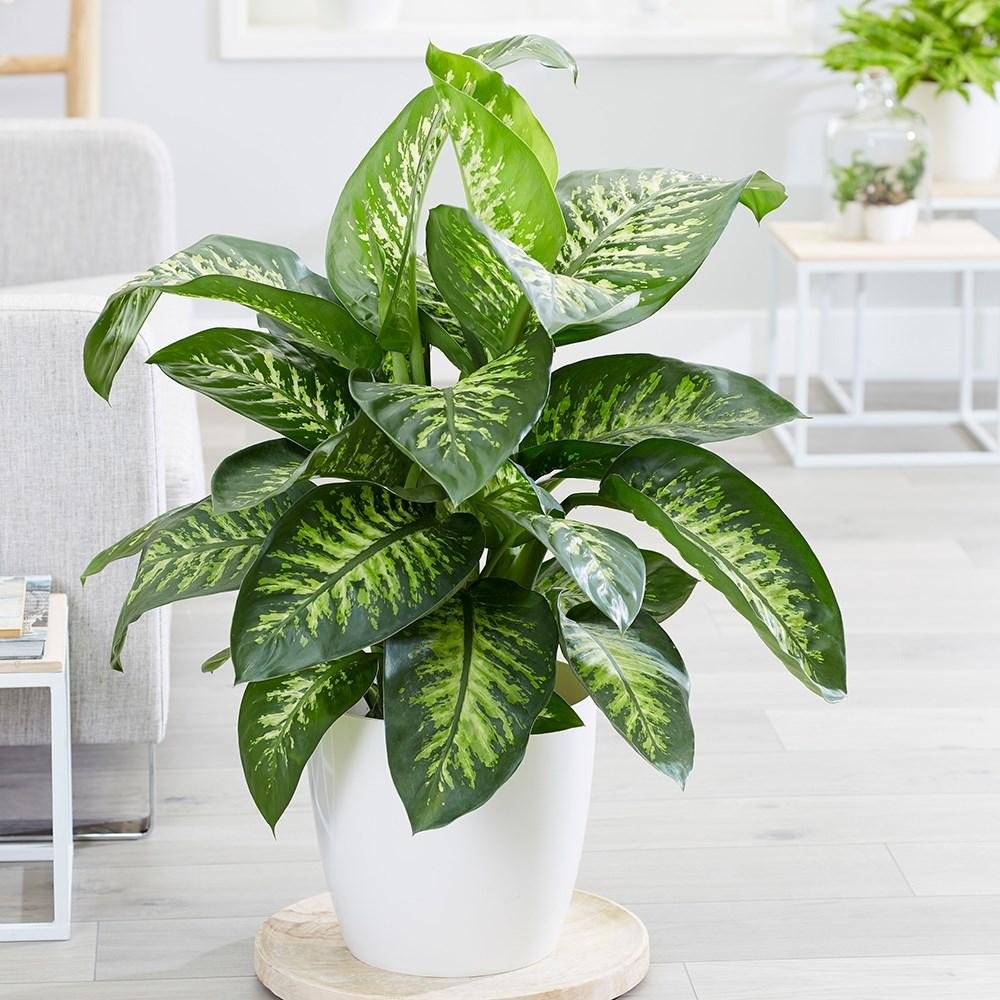
Description
1. Plant Description
Dieffenbachia, commonly known as Dumb Cane, is a popular tropical foliage plant admired for its large, broad leaves with attractive green, cream, and yellow patterns. It is widely grown as an indoor ornamental plant because of its lush appearance and ability to thrive in bright, indirect light.
Depending on the variety and growing conditions, Dieffenbachia can grow into a bushy plant or develop a taller stem with age. It is an excellent choice for decorating living rooms, offices, and other indoor spaces.
2. Benefits of Dieffenbachia
-
Beautiful Decoration: Its large, patterned leaves add a fresh, tropical appearance to indoor spaces.
-
Suitable for Indoor Growing: It grows well in containers and can thrive indoors with appropriate lighting.
-
Low Maintenance: It generally requires moderate watering and does not need constant attention once established.
-
Versatile Placement: It can enhance living rooms, offices, hallways, and other bright indoor areas.
-
Natural Greenery: Its foliage helps create a more welcoming and nature-inspired atmosphere.
Note: Dieffenbachia should not be considered a proven air purifier for ordinary homes; ventilation and appropriate air filtration are more effective for indoor air quality.
3. Complete Care Guide

Sunlight
Provide bright, indirect light. Avoid strong direct afternoon sunlight, which can scorch the leaves. Lower light may slow growth and reduce leaf-pattern vibrancy.

Watering
Water when the top 1–2 inches (2.5–5 cm) of soil feel dry. Check the soil every few days, but water only when needed. Water thoroughly until excess drains out, then empty the saucer.
Best time: Morning is convenient, but soil moisture matters more than the exact time. Reduce watering during winter if growth slows.

Soil and Pot
Use a loose, well-draining indoor potting mix containing materials such as perlite. Choose a pot with drainage holes to prevent waterlogged roots.

Temperature and Humidity
-
Ideal temperature: approximately 65–80°F (18–27°C).
-
Avoid cold drafts and temperatures below about 55°F (13°C).
-
Moderate to high humidity supports healthy leaves.
-
Keep the plant away from heating and air-conditioning vents.

Fertilizer
During spring and summer, apply a balanced indoor plant fertilizer at the label’s recommended rate. Avoid overfertilizing, and reduce or stop feeding during slower winter growth.

Pruning and Maintenance
Remove yellow or damaged leaves using clean tools. Wipe dusty leaves gently with a damp cloth. Rotate the pot occasionally to encourage balanced growth.
4. Common Problems and Solutions
| Problem | Possible cause | Solution |
|---|---|---|
| Yellow leaves | Overwatering or natural aging | Check soil moisture and drainage |
| Brown leaf tips | Dry air, salt buildup, or inconsistent watering | Review watering and use suitable-quality water |
| Drooping leaves | Soil too dry or too wet | Check soil before watering |
| Pale leaves | Insufficient light or nutrient issues | Improve indirect light and review feeding |
| Small pests or webbing | Spider mites, mealybugs, or other pests | Isolate the plant and treat appropriately |
5. Safety Precautions ⚠️
Dieffenbachia contains calcium oxalate crystals that can cause intense mouth irritation, swelling, and pain if chewed or swallowed. Its sap can also irritate the skin and eyes.
-
Keep it away from children and pets.
-
Wear gloves when pruning or handling damaged stems.
-
Wash your hands after handling the plant.
-
If ingestion occurs, contact a poison control service or veterinarian as appropriate.

Reviews
There are no reviews yet.