
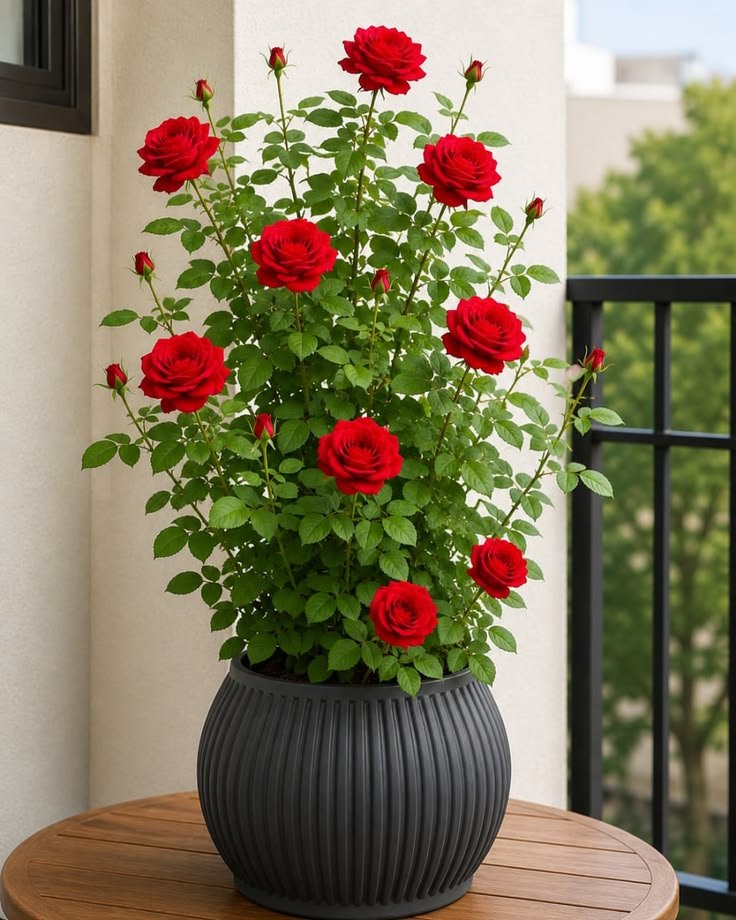
The desi gulab is loved for its fragrance and its beautiful flowers, and it is one of the most popular plants in Pakistani gardens. With the right care, a rose can flower for many months of the year. The most important job of the season is pruning, and it is best done in autumn. This guide shows you how.
Light and place
Roses need sun. Give your desi gulab at least six hours of direct sun a day. In the heat of summer, a little shade in the afternoon helps the flowers last longer. Good air movement keeps the leaves healthy.
Pot and soil
- Use a large, deep pot, about 35 to 45 centimetres wide and as deep.
- Make sure it has drainage holes.
- Use rich soil: potting mix mixed with plenty of compost or well-rotted manure. See our soil and fertiliser guide.
Watering
Water deeply when the top few centimetres of soil are dry, and let the water drain. In summer that may be every day or two, and in winter much less often. Water at the base in the morning, and avoid wetting the leaves, because wet leaves in the evening can lead to fungus.
When to prune
In Punjab, many gardeners prune roses in autumn, roughly from late October to November, when the weather cools and before the winter flush of growth. In colder northern areas, wait until the worst frost has passed. Avoid hard pruning in the heat of summer.
How to prune, step by step
- Use clean, sharp secateurs. Wipe the blades with rubbing alcohol if you can.
- First remove all dead, diseased and weak stems, cutting back to healthy green wood.
- Remove thin, crossing branches and any that grow inwards, so air can move through the plant.
- Reduce the remaining stems by about one third, or shorten them to a healthy bud.
- Make each cut at an angle, about half a centimetre above an outward-facing bud.
- Clear away the fallen leaves and cuttings from the soil, so that disease does not spread.
Feeding after pruning
After pruning, add a handful of compost or well-rotted manure to the top of the soil and water it in. During the flowering season, feed every three to four weeks with a balanced or rose fertiliser, following the label. Do not feed in the coldest weeks or in extreme heat.
More flowers
- Remove faded flowers as soon as they finish. This is called deadheading, and it helps the plant make new buds.
- Keep the plant in good sun, and do not let it dry out when it is in bud.
- Mulch the soil with dry leaves or coco chips, to keep the roots cool and moist.
Common problems
- Aphids: small insects on new buds. Rinse them off with water, or wipe them off.
- Black spots on leaves: a fungus. Remove the affected leaves and water at the base.
- Few flowers: usually not enough sun, or not enough feeding.
- Yellow leaves: often too much water, or a lack of nutrients.
For safe pest control at home, always follow the product label and keep children and pets away from sprayed plants.
Roses and pets
Roses have thorns, so place pots away from walkways and play areas, and wear gloves when you work with them.
Rose care calendar for Punjab
A simple yearly plan keeps your rose healthy and full of flowers.
- Late October to November: prune, feed with compost and mulch the soil.
- December and January: the plant rests. Water lightly, protect it from hard frost and do not feed heavily.
- February and March: new growth and the spring flush. Water more and feed every three to four weeks.
- April and May: the main flowering period. Remove faded flowers, water deeply and give some shade in the hot afternoons.
- June to August: heat and monsoon. Give afternoon shade, water in the morning, avoid hard pruning and watch for fungus.
- September: tidy up, feed lightly and get ready for autumn pruning.
Grow new roses from cuttings
You can make new plants from your rose.
- Choose a healthy, pencil-thick stem and cut a piece about 20 to 25 centimetres long, with three or four nodes.
- Make the bottom cut at an angle just below a node, and remove the lower leaves.
- Push the stem into a moist, sandy potting mix, leaving one or two nodes above the soil.
- Keep it in bright shade and keep the soil moist, but not wet.
- Roots can take four to eight weeks. Not every cutting will succeed, so take several.
The best times are roughly October to November and February to March.
Fungus and pests in more detail
- Powdery mildew: a white powder on the leaves. Remove the worst leaves and improve air flow.
- Black spot: dark spots on the leaves. Remove affected leaves and do not wet the foliage.
- Aphids: tiny insects on buds and new growth. Rinse them off with water.
- Spider mites: fine webs and speckled leaves in hot, dry weather. Rinse the plant and raise humidity.
If you use a spray, such as a neem-based product, follow the label, and keep children and pets away until it dries.
Questions people ask
Why are my rose leaves yellow?
The most common causes are too much water, too little feeding or a lack of sun. Check the soil first.
Why is my rose not flowering?
Usually it is not getting enough sun, or it needs pruning and feeding. Roses need at least six hours of direct sun.
How often should I water?
When the top few centimetres of soil are dry. In summer that may be daily, and in winter much less often.
Can roses grow in shade?
They survive but flower poorly. Give them as much sun as you can.
You can see more flowers in our flowering plants section. If you have a rose that is not flowering, call or WhatsApp us on 03128018787 and tell us what you see.